What It May—and May Not—Mean
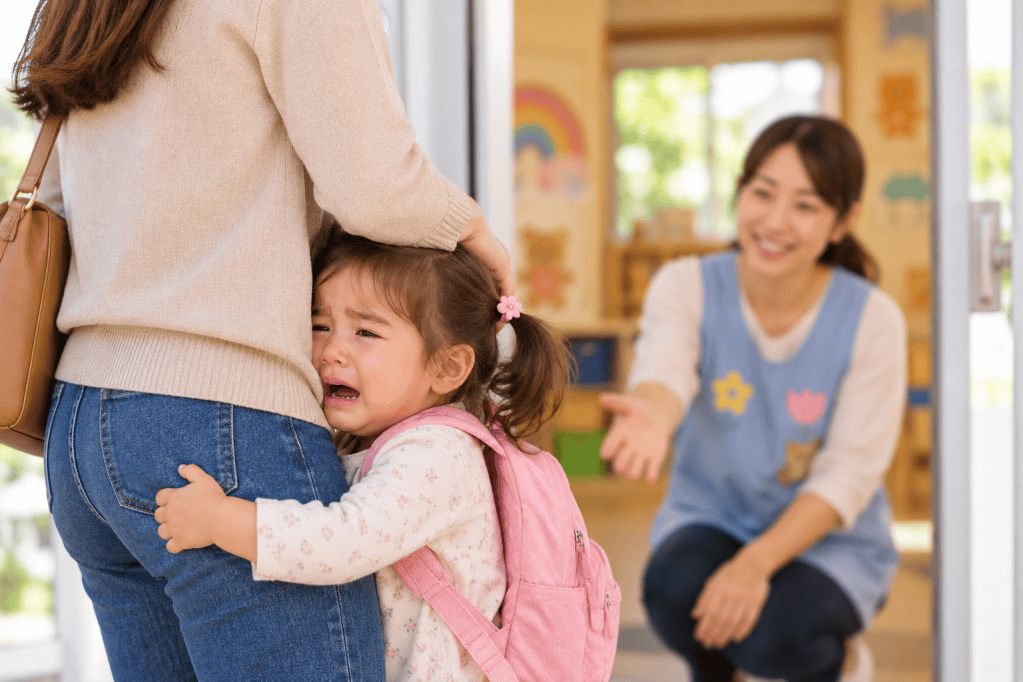
You arrive at daycare.
Your toddler realizes what is about to happen.
Maybe they hold your hand tighter.
Maybe they reach for you.
Maybe they cry the moment you begin to say goodbye.
And even after you leave, that moment can stay with you.
You may find yourself wondering:
“Why does my toddler still cry at daycare drop-off?”
Or perhaps:
“Does this mean my child is not okay here?”
As both a mom and a Registered Early Childhood Educator, I understand why those few emotional minutes can feel so important.
The crying is real.
Your child may genuinely be finding separation difficult.
But crying at drop-off does not automatically tell us everything about how your toddler experiences the rest of the daycare day.
Let’s look at what those tears may—and may not—mean.
1. Your Toddler May Be Reacting to the Separation Itself
For some toddlers, the hardest part of daycare is the moment when their parent leaves.
Your child may recognize the classroom.
They may know their educator.
They may even enjoy certain parts of the day.
But when it is time to say goodbye, their feelings can become very strong.
That reaction may mean:
“I don’t want you to leave.”
It does not necessarily mean:
“I don’t like daycare.”
Those are not always the same thing.
A toddler can feel upset about separating from you and still go on to have comfortable, playful, or meaningful moments during the day.
2. Crying Is One Way Toddlers Communicate
Young children do not always have the words to explain what they are feeling.
They may not yet be able to say:
- “I’m going to miss you.”
- “I wish you could stay.”
- “This goodbye feels hard.”
- “I’m tired today.”
- “I need reassurance.”
- “I know what happens next, but I still don’t like this part.”
Sometimes tears communicate what words cannot.
That is why crying deserves attention.
But it does not always give us the whole explanation.
Instead of asking only:
“Did my child cry?”
it can be more helpful to ask:
“What happened before, during, and after the crying?”
The fuller picture matters.
3. Your Child May Still Be Learning the Drop-Off Routine
Toddlers often benefit from repetition and predictability.
In the beginning, the daycare sequence may still feel unfamiliar.
It may look something like:
Arrive → put belongings away → say goodbye → parent leaves → educator stays
Over time, some children begin to recognize this pattern.
That does not guarantee there will be no tears.
But knowing what happens next may gradually make the transition feel more familiar.
A simple, consistent goodbye can sometimes help.
For example:
“Mommy is going to work now. Your teacher will stay with you. I love you, and I will come back later.”
Keep the message short, truthful, and calm.
4. Crying May Be Stronger on Some Days Than Others
Daycare adjustment does not always happen in a straight line.
Your toddler may have several easier mornings and then cry again.
That does not automatically mean all previous progress is gone.
Some mornings may simply feel harder.
Your child may be:
- tired
- hungry
- returning after a weekend
- adjusting to a routine change
- wanting extra closeness
- having a more emotional morning
You do not need to figure out the exact reason on your own.
Instead, observe patterns and keep communicating with your child’s educator.
One hard morning does not necessarily define the entire daycare transition.
5. What Happens After You Leave Matters Too
Parents usually see the goodbye.
Educators see what happens next.
After you leave, your toddler may:
- accept comfort from a familiar educator
- watch the other children
- move toward a favourite toy
- sit for breakfast
- listen to a familiar song
- join an activity
- explore the classroom
- gradually become calmer
Not every child settles quickly.
Some toddlers may need more time.
But if you only see the tears at the doorway, you may be missing other important parts of your child’s day.
Related Reading
What Really Happens After You Leave Daycare Drop-Off?
What Crying at Drop-Off Does Not Automatically Mean
Crying does not automatically mean:
- your toddler hates daycare
- your child is unhappy all day
- you made the wrong childcare decision
- your child has not built relationships with educators
- your toddler is not adjusting
- the transition is failing
Those conclusions require more information than the goodbye alone can provide.
Instead, look at your child’s overall experience.
What Else Can You Look For?
Along with drop-off, consider questions like:
- Does my child eventually settle?
- Are they beginning to recognize familiar educators?
- Are they exploring the classroom?
- Are they joining some routines?
- Are they accepting comfort or support?
- Do they mention daycare at home?
- Are there moments when they seem curious, engaged, or comfortable?
These quieter signs may tell you more about adjustment than the first few minutes of the morning.
Related Reading
7 Signs Your Toddler Is Adjusting Well to Daycare—Even If They Still Cry at Drop-Off
What Can I Do When My Toddler Cries at Drop-Off?
You cannot control every emotion your toddler experiences.
But you can help make the goodbye more predictable.
Keep Your Goodbye Simple
Use a short message that feels natural to you.
For example:
“It’s time for Mommy to go to work. I love you. Your teacher will stay with you, and I’ll come back later.”
Avoid Repeated Goodbyes
It can be tempting to leave, return for one more hug, and then leave again.
But repeated goodbyes may sometimes make the transition feel less clear.
Let the Educator Be Part of the Hand-Off
When possible, allow the educator to support your child during the transition.
Your toddler is gradually learning:
“My parent leaves, and another caring adult stays with me.”
Ask About the Rest of the Day
At pickup, instead of asking only:
“Did my child cry?”
try:
“What helped them settle today?”
or:
“What was one moment when they seemed comfortable or interested?”
That can give you a much fuller picture.
When Should I Talk More With My Child’s Educator?
You do not have to wait until something feels wrong before asking questions.
If you are unsure about your child’s adjustment, communicate.
You might ask:
“I know goodbye is hard for them. What usually happens after I leave?”
or:
“What are you noticing during the rest of the day?”
A strong family–educator partnership is not about pretending everything is perfect.
It is about sharing observations and building understanding together.
If you have ongoing concerns about your child’s wellbeing, development, behaviour, or health, speak with the appropriate educator or qualified professional about those specific concerns.
A Gentle Reminder for Moms
Sometimes your toddler cries for a few minutes.
But you may carry those tears with you for hours.
You leave daycare and replay the goodbye.
You wonder whether you should have stayed longer.
You wonder whether your child is okay.
You may even wonder whether everyone else’s toddler is adjusting better.
But remember:
Your view of daycare is naturally shaped by the moment you are there to see.
And often, that moment is the goodbye.
Your child’s educator sees many other moments throughout the day.
That is why communication can be so reassuring.
You do not need to dismiss the tears.
But you also do not need to let those tears tell you a story you do not yet have enough information to know.
Ms. Narcy Truth
Crying tells us something—but it doesn’t tell us everything.
One Small Thing to Try Tomorrow
Before drop-off, choose one short goodbye sentence.
Say it calmly and consistently.
Then at pickup, ask:
“What happened after I left?”
That one question may help you understand much more about your child’s day.
Final Thoughts
A tearful daycare goodbye can be difficult to watch.
But your toddler’s adjustment cannot always be measured by whether they cry when you leave.
Look beyond the doorway.
Look at relationships.
Look at routines.
Look at curiosity.
Look at comfort.
Look at what happens after the goodbye.
The tears are part of the story.
They are not necessarily the whole story.
You May Also Like
- 7 Signs Your Toddler Is Adjusting Well to Daycare—Even If They Still Cry at Drop-Off
- What Really Happens After You Leave Daycare Drop-Off?
- 5 Drop-Off Tips That Make Daycare Easier
- How Long Does It Take a Toddler to Adjust to Daycare?
💛 Free Resource
5 Things I Wish Someone Had Told Me Before My Child Started Daycare
Starting daycare can bring a lot of questions and emotions.
If you are looking for gentle encouragement and practical educator insights during your child’s transition, I’d love to share my free guide with you.
Button:
Download the Free Guide
📖 Looking for More Support?
If you want deeper encouragement through the emotional side of starting daycare, you may also enjoy From Tears to Trust.
It brings together the perspective of a mom and a Registered Early Childhood Educator to help parents understand daycare transition with greater confidence and less uncertainty.
Learn More About From Tears to Trust


Leave a Reply